Speak first: why your Japanese voice matters more than an N1 certificate
A school dropped its N4 rule after hearing me speak, and I was hired with N3 where N2 candidates were refused. Why the way you speak Japanese opens more doors than certificates and kanji — and how to train your voice.
Two moments convinced me that the way you speak Japanese matters more than any certificate.
The first: the language school I wanted asked for the N4 level to apply. I had no certificate at all — I had only studied by myself. So I sent them a recording of myself speaking Japanese. They changed their mind and dropped their N4 rule for me.
The second: years later, I got a job in Japan with an N3 certificate, for a position where candidates with N2 were rejected.
The certificate was not the final decision either time. My voice was.
The JLPT (日本語能力試験) has five levels, from N5, the easiest, to N1. Schools and companies love it because it is simple to compare: "N2 required" fits on a job ad.
But look at what the JLPT actually tests: reading and listening, with multiple-choice answers. There is no speaking test and no writing test. You can pass N2 without ever having held a real conversation in Japanese — and many people do.
So when a school or a company finally meets you, in an interview, the certificate is behind you. What they test then is the one thing the JLPT never checked: can we talk with this person?
This surprised me when I arrived. Most Japanese people are not cold to foreigners — they are afraid. Afraid of not understanding you, and afraid of not being understood.
You can see it happen. A Japanese person meets a foreigner, panics a little, and switches to English. But English is their weak point: most of them studied it for years at school and almost never spoke it. Even when someone does speak English, they often use Japanese-style English — katakana words and Japanese sentence patterns — so they feel even more embarrassed when you don't understand them. The conversation dies, and both sides go home thinking the other one was difficult.
That fear is also why some companies hesitate to hire foreigners. It is not your skills they doubt. It is the daily conversation: meetings, phone calls, a quick question in the corridor.
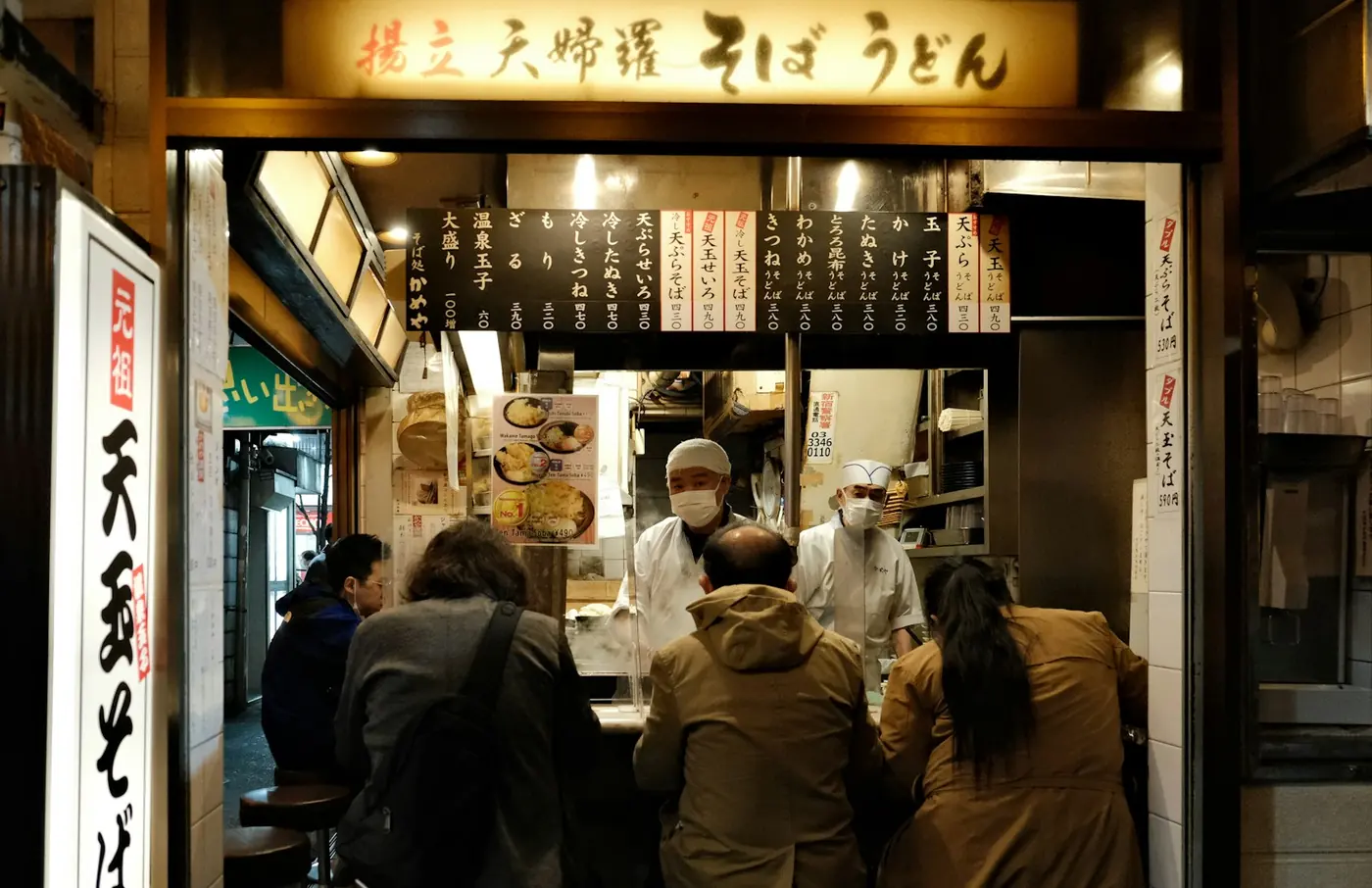
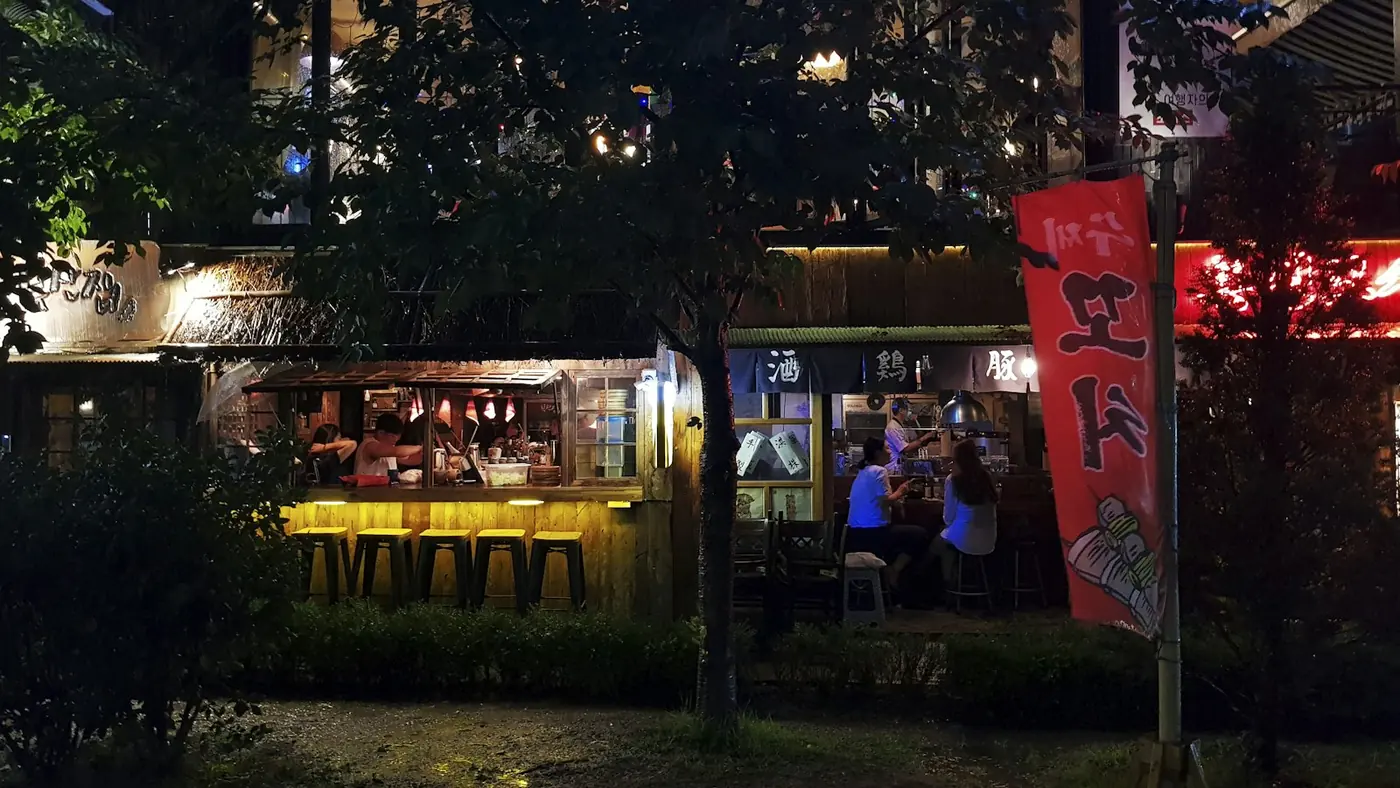
Daily life in Japan happens in quick, spoken Japanese — at counters, in corridors, on the phone
Now imagine the opposite. You start speaking, and you sound Japanese: the rhythm, the pronunciation, the small polite sounds in the right places. Even if you don't understand every word, the person in front of you relaxes immediately. They don't have to switch to English. The fear is gone.
Once that fear is broken, you have already done most of the work — in a job interview, with a landlord, at the ward office, and when making friends. Speaking fluently, even with gaps, takes you from "acceptable" to attractive.
There is a deeper reason too. Deep inside, many Japanese people compare themselves with you. They know how hard learning a language is — they struggled with English for years. When they hear a foreigner who clearly worked hard to speak their language well, they don't see your mistakes. They see the effort, and it earns you a kind of respect a certificate never will.
When I applied to my language school in Osaka in January 2021, the school expected applicants to have at least the N4 level. I had studied by myself for about three years and had no certificate.
So with my application email I attached a voice recording of myself speaking Japanese. The school looked at me differently after that. They moved me to an interview, held part of it in Japanese, rated my level themselves at around N4, and accepted me — no certificate needed. The whole story of that application is in my student visa article.
When I looked for work in Japan, I had the N3. Some of the positions I applied for listed N2, and some of the other candidates had it. I was hired; candidates with N2 were refused.
The difference was the interview. An interview is spoken from the first second: the self-introduction (自己紹介), the answers, the small talk at the door. A certificate gets your CV read. The way you speak decides the rest.
This is why I tell people to start with the sound of Japanese — its pronunciation (発音, hatsuon), its rhythm and its intonation — and not only with kana tables and kanji lists.
Your ears first: most of a natural accent comes from listening a lot
Watch anime and dramas — a lot. That is how I got used to the hatsuon. Your ear learns where Japanese rises and falls, how fast people really talk, and how emotion sounds. One warning: anime characters often talk rudely or dramatically (ore, omae, shouting). For polite everyday Japanese, add dramas, YouTube vlogs and the news.
Shadow. Play a short line, pause, and repeat it with the same melody, not just the same words. Then try speaking at the same time as the audio. Ten minutes a day does more than an hour of reading.
Learn the pitch, not just the word. Japanese changes meaning with pitch: hashi can be "bridge" (橋) or "chopsticks" (箸). You don't need to study theory — copy what you hear.
*Use 相槌 (aizuchi).* The small sounds Japanese people make while listening — はい, ええ, なるほど, そうなんですね. They show you are following, and they make you sound natural immediately.
Keep your fillers Japanese. Say えーと or あのー while you think, never "euh" or "umm". It sounds like a small detail; it changes how Japanese you sound.
Prepare the spoken set pieces. Your 自己紹介, why you came to Japan, why this school or this company, and よろしくお願いします at the end. Say them until they come out naturally, with the right melody.
Record yourself and compare. Record a minute of speaking, play it next to a native speaker saying the same thing, and fix the differences. That recording is also what I sent to my school.
Talk to real people. The convenience store, the barber, a language exchange, the neighbour. Every short conversation lowers your fear — and theirs.
I am not saying never learn hiragana, katakana or kanji. Hiragana and katakana take a few weeks, and you will need them for daily life, forms and work. Kanji come little by little over the years.
What I am saying is: don't wait until you can read to start speaking. Most learners do it the other way round — years of kanji, a high certificate, and then they freeze in their first real conversation. Put the voice first, and let reading and writing grow next to it.
Friends, interviews, landlords: every door in Japan opens with a conversation
My Japanese opened doors that my certificates could not: a school that changed its rule, a job I wasn't "qualified" for on paper. When I help students with 7-MD's study-in-Japan support, preparing the voice is part of preparing the application — the recording for the school, the interview, the first words you will say in Japan.
K
Kader — 7-MD
Kader is the founder of 7-MD, a creator brand and digital studio in Osaka, Japan. He went from an engineering career in Algeria to building software, stories and services in Japan — and writes here about what 7-MD makes and how.
What I did in my first weeks as a student in Osaka, in the right order: the SIM card I ordered before flying, the question at the airport you should say yes to, the ward office, opening a bank account, the apartment — and how a supermarket and a 1,200-yen haircut changed my budget.
How I went from Algeria to a language school in Osaka with no agent and nobody in Japan: choosing the school, the sponsor question, the documents, the COE, the bank transfer that took a week, the visa and the first day — with real dates and costs.
My real experience converting an Algerian licence at the Kadoma centre in Osaka: the phone calls, the interview, the written test, the failed driving tests — and the app I built so other foreigners don't waste months and money.